
ACE-ing Student Success and Retention
Pitt’s Anita Persaud receives the 2025 Provost’s Award for Excellence in Undergraduate Student Success
Photo above: Anita Persaud (center) with her ACE mentors and students.
The University of Pittsburgh’s Anita Persaud, Director of Retention at the Swanson School of Engineering, has received the 2025 Provost’s Award for Excellence in Undergraduate Student Success – Student Success Impact. Since 2017, Persaud has developed and fine-tuned the Academic and Career Enhancement (ACE) program, which helps academically at-risk students develop skills and access the support they need to persist and earn their engineering degrees.
“I’m so proud to be among our committed university staff, faculty, and administrators who devote their careers to mentoring, advising, and teaching our students,” said Persaud.
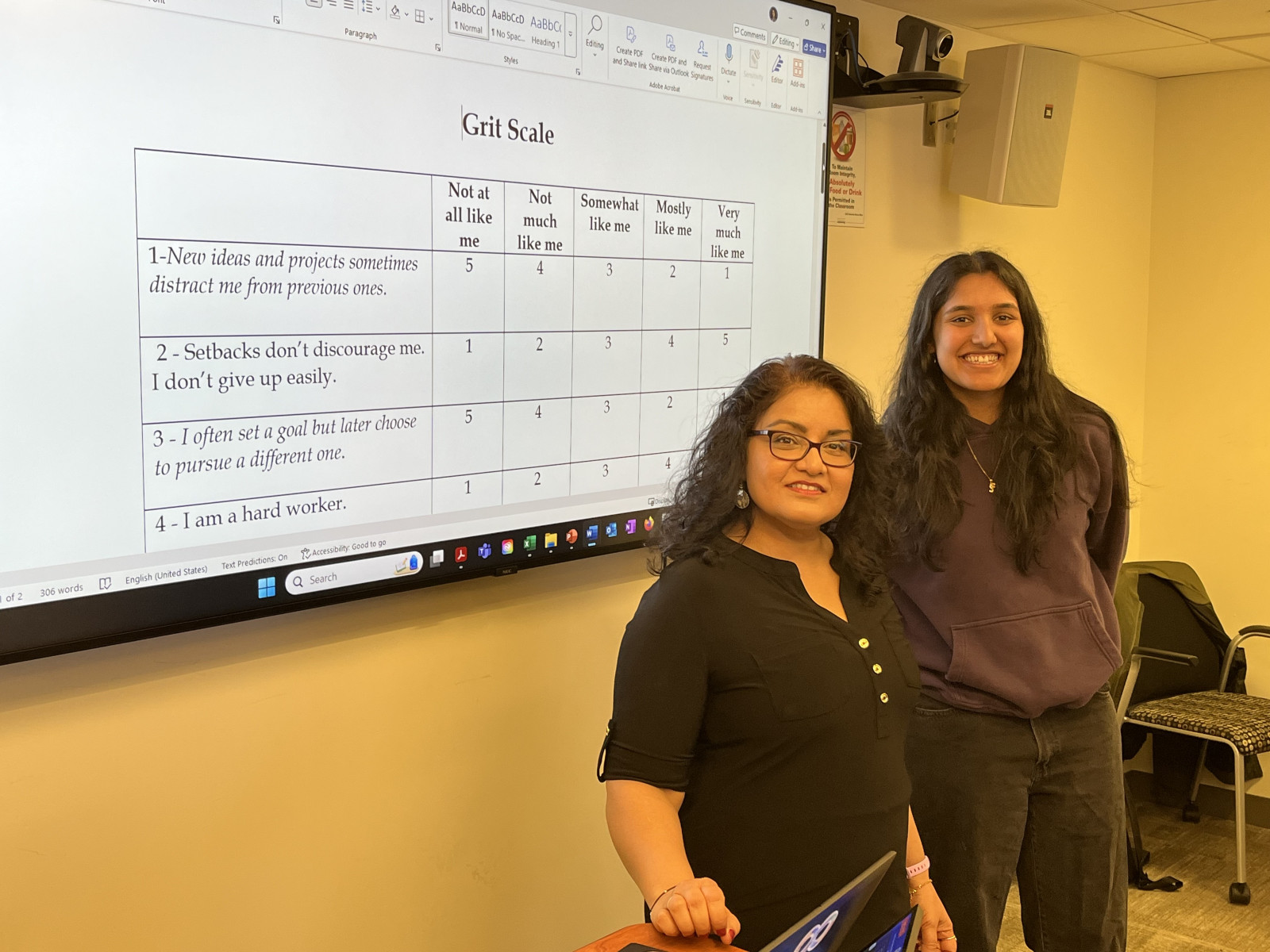
As Director of Retention, she and her team of ten student peer mentors, who themselves have been in the ACE program, conduct group meetings where they teach study skills, grit, growth mindset, intrinsic motivation, and taking ownership of successes and failures. They encourage self-care for managing stress and burnout, and they present the science behind procrastination. “I help our students learn how to learn difficult material effectively,” Persaud said.
The ACE program supports students who face setbacks such as academic probation, academic warning, or reinstatement from suspension or dismissal. These students struggle with issues like learning challenges, imposter phenomenon, time management, mental health, study skills, and goal setting. Many of her students return each semester because they value the accountability and can see tangible results like making honor roll or the Dean's List.
Persaud’s passion to support students stems in part from her upbringing. Growing up in Queens, New York City, and attending Queen’s College as an undergraduate, she saw firsthand the profound impact a college degree can have on first-generation, low-income students.
She has also had teachers who believed in her and helped her reach her potential—individuals like Steven Newman, her seventh-grade science teacher. Persaud struggled with math, and Newman would tutor her during his lunch periods. “He always believed in me and encouraged me, and I credit him with the high math score I earned on the state math exam in eighth grade.”
Later in graduate school, she encountered challenges that nearly derailed her pursuit of a Doctor of Education degree in Counselor Education at Penn State University. With the support of “amazing” professors and advisors, she persisted and earned her DEd.
Since graduating, Persaud has worked in many roles at Penn State, Carnegie Mellon University, and Pitt, all with a common goal: helping students reach their potential and graduate college. She aspires to be the kind of mentor who played such an important role in her life.
For Persaud, that means researching developments into ways to help students succeed, be that managing anxiety or overcoming screen addiction. She ensures her ACE students explore relevant topics and learn practical strategies.
Persaud also proactively engages students and keeps lines of communication open. She meets with cohorts during evening hours, so they can access support after classes have finished. She reaches out to students whose grades have dipped, even if they are still in good academic standing, so they know about ACE. She regularly texts her students to check in and provide reminders. “I make them know that I remember what they’re working on, and I remind them that they’re important and that they can do this.”
“Anita has been an exceptional leader in the success of our students. She is the model of a passionate advisor eager to help engineering students,” said Mary Besterfield-Sacre, Senior Associate Dean for Academic Affairs and Nickolas A. DeCecco Professor in Industrial Engineering. “Of the students who start and complete her program, 95% are in good standing, 100% are retained in engineering, and 100% are retained at Pitt.”
One such student, an environmental engineering graduate, said, “I started ACE on academic probation, with a semester GPA of a 1.8… I spent three years in the ACE program. I ended my college career graduating with honors. I completed two valuable internships, signed a job offer, and passed my Fundamentals of Engineering exam! None of this would have been possible without the guidance, support, and advising from Anita.”
Of her role at the Swanson School, Persaud said, “I found my niche working with engineering students. I like to think about the future. Years from now, long after I’ve retired, these students will be developing solutions to make the world a better place, and knowing that the work of the staff, faculty, and administrators here at Pitt will live on through these students’ accomplishments—that’s remarkable.”