
Powering Opportunities and Partnerships
Pitt Professor Brandon Grainger and two PhD students develop converter with a $70K Manufacturing PA Innovation grant
University of Pittsburgh Associate Professor Brandon Grainger and his PhD students Todd Marzec and Sina Navaiyan, in collaboration with Pittsburgh startup CorePower Magnetics, have successfully designed and developed an H-bridge power electronics converter for magnetic core testing. Their system can be used to characterize larger, more sophisticated magnetic cores, helping to improve energy efficiency.
Titled “Power Electronics Based Measurement System for Characterizing Magnetic Components,” the project was funded by a $70,000 grant, with a matching cost share, from the Pennsylvania Department of Community & Economic Development through its Manufacturing PA Innovation Award program.
“This project gave two Pitt graduate students the opportunity to work with higher voltage,” said Grainger, who is also the Eaton faculty fellow in the Department of Electrical and Computer Engineering and the Director of the Electric Power Technologies Laboratory. “The hands-on experience developing, designing, and testing hardware using the latest semiconductor technology is so valuable as they head out to the workforce.”
In magnetic cores, which are essential to power generation and transfer, magnetic domains change their orientation with the applied magnetic field as voltage fluctuates, resulting in energy loss. To improve efficiency, engineers develop systems to characterize, or test, these cores like those developed in this program.
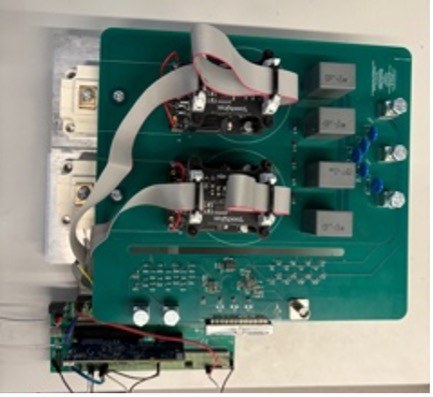
As magnetic cores advance and reach higher operating frequencies, so too must these converters, which convert electrical energy from one form to another. Grainger and his team utilized semiconductor modules that are rated for 1700 volts and capable of switching up to 100 kilohertz.
“The modules in use here in Pittsburgh today are rated for 1200V. Moving up to this new class provides more range based off the newest technology,” noted Grainger. “We’ve been working on this system since last year when we received the grant, learning and designing.”
“With higher voltage and higher frequency, you can test larger magnetic components, which is more realistic to what the industry uses,” said Marzec.
With this successful prototype, CorePower Magnetics can stimulate their magnetic cores with high-frequency waveforms to evaluate product inefficiencies beyond what is capable at universities.
“Collaborating with engineers at CorePower Magnetics was an incredible opportunity,” said Navaiyan. “The electrical engineers have so much experience developing these systems and provided valuable insights throughout the year.”
“I’m always looking for industry leaders to partner with on grants like this one,” said Grainger. “It’s a great opportunity for everyone involved. PhD students gain hands-on workforce experience while Pennsylvania businesses solve problems and innovate.”